











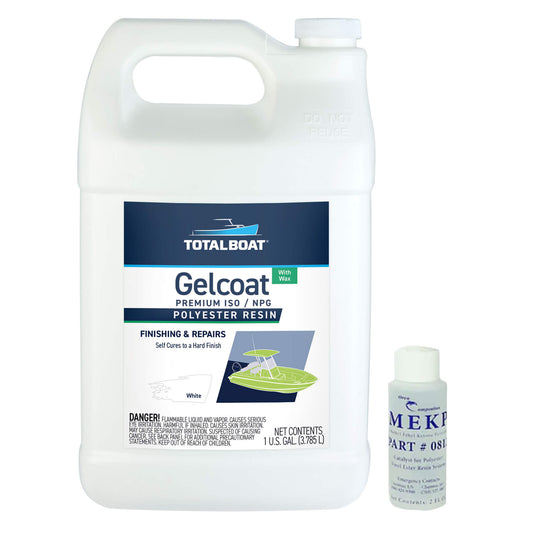



PREMIUM ISO/NPG GELCOAT
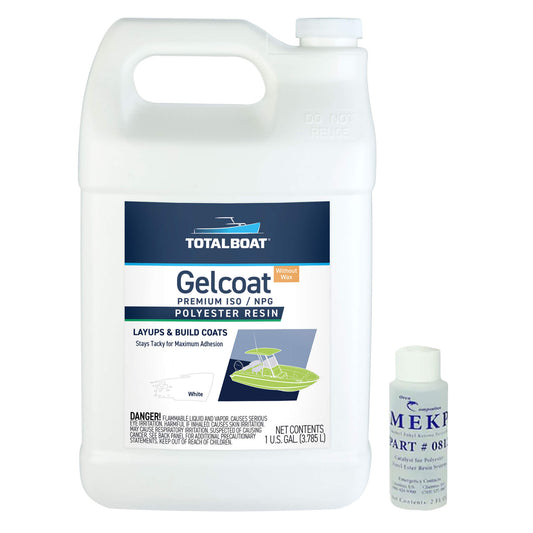
Cures to a stronger finish compared to orthophthalic formulas
FOR BOAT BUILDING & REPAIRS
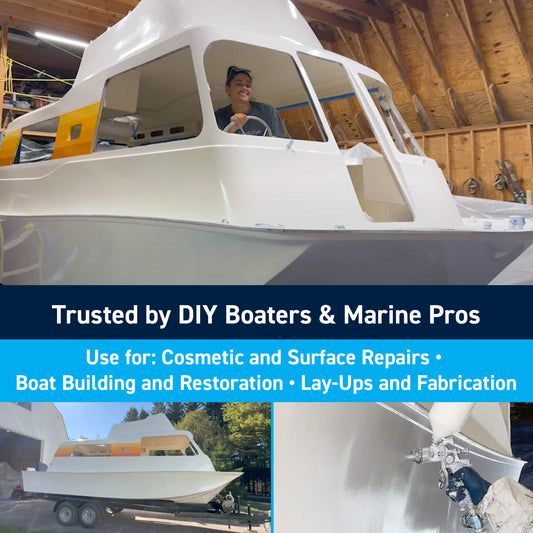
Ideal for hull repairs, coating, and building fiberglass parts
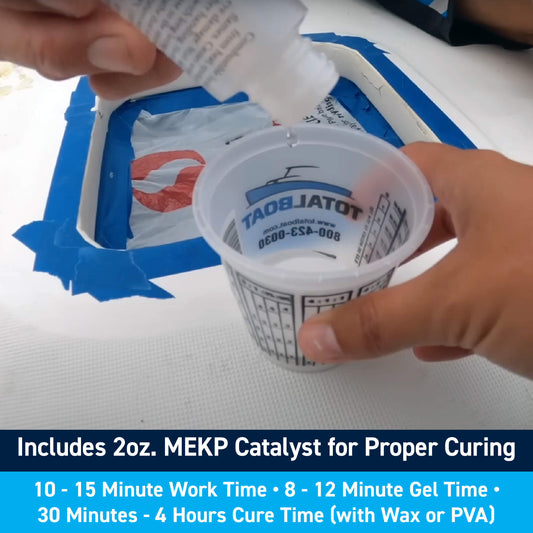
INCLUDES MEKP CATALYST
Adjust based on gelcoat amount and working temperatures
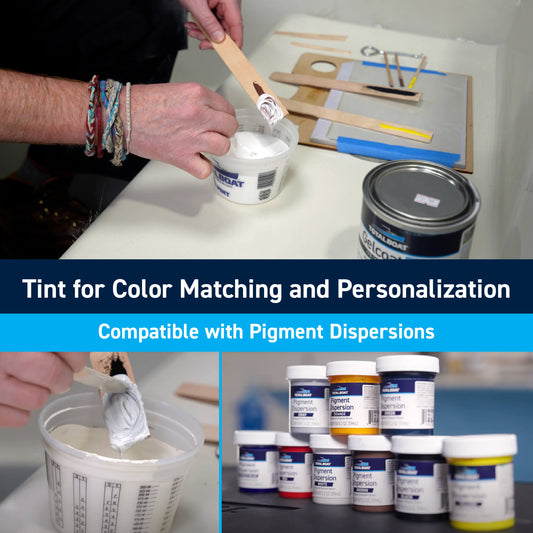
EASY TO USE, EASY TO TINT
Create bold colors with Neutral and pastel colors with WhitePolyester Gelcoat
Polyester Gelcoat
PREMIUM ISO/NPG GELCOAT
Cures to a stronger finish compared to orthophthalic formulas
FOR BOAT BUILDING & REPAIRS
Ideal for hull repairs, coating, and building fiberglass parts
INCLUDES MEKP CATALYST
Adjust based on gelcoat amount and working temperatures
EASY TO USE, EASY TO TINT
Create bold colors with Neutral and pastel colors with WhiteCouldn't load pickup availability

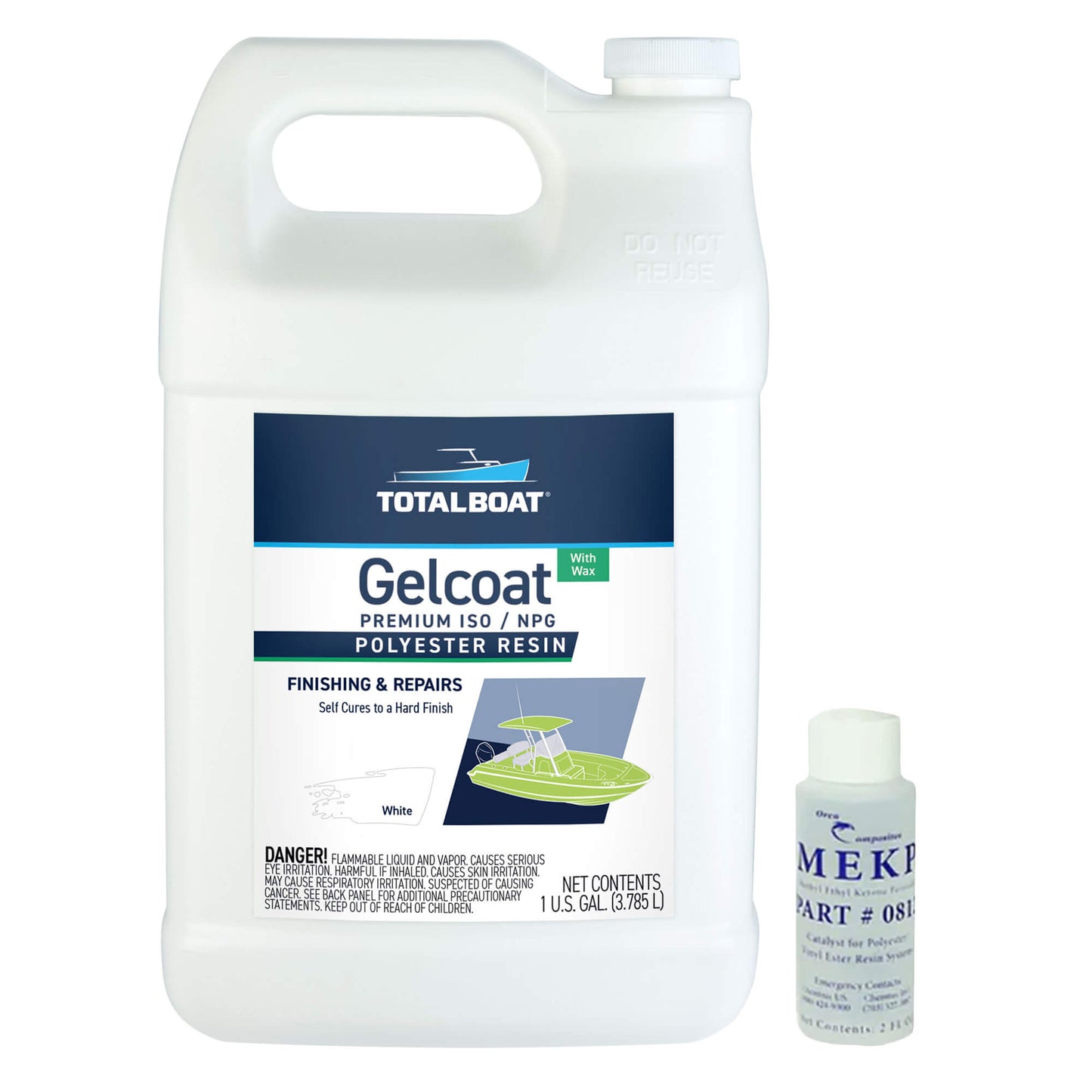
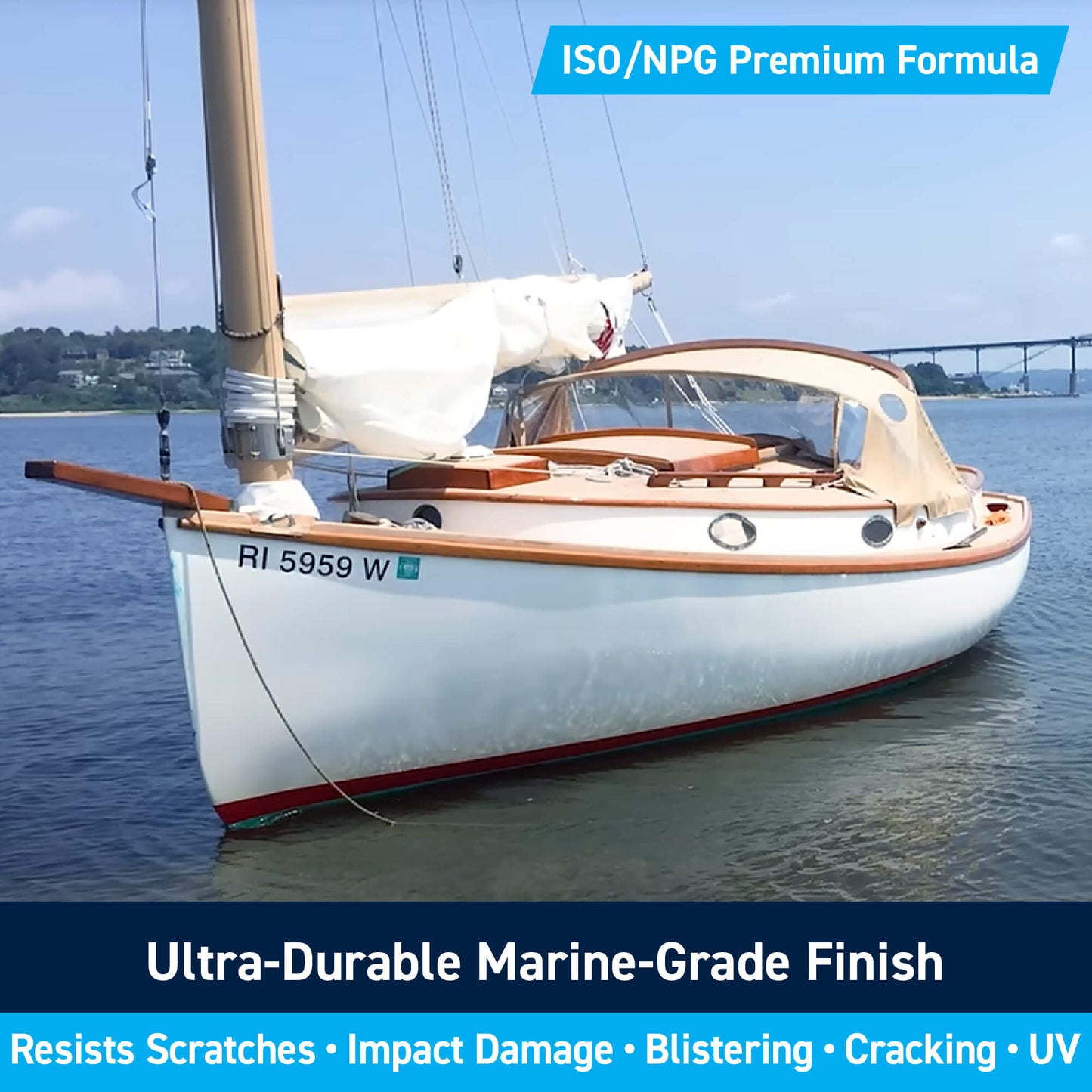
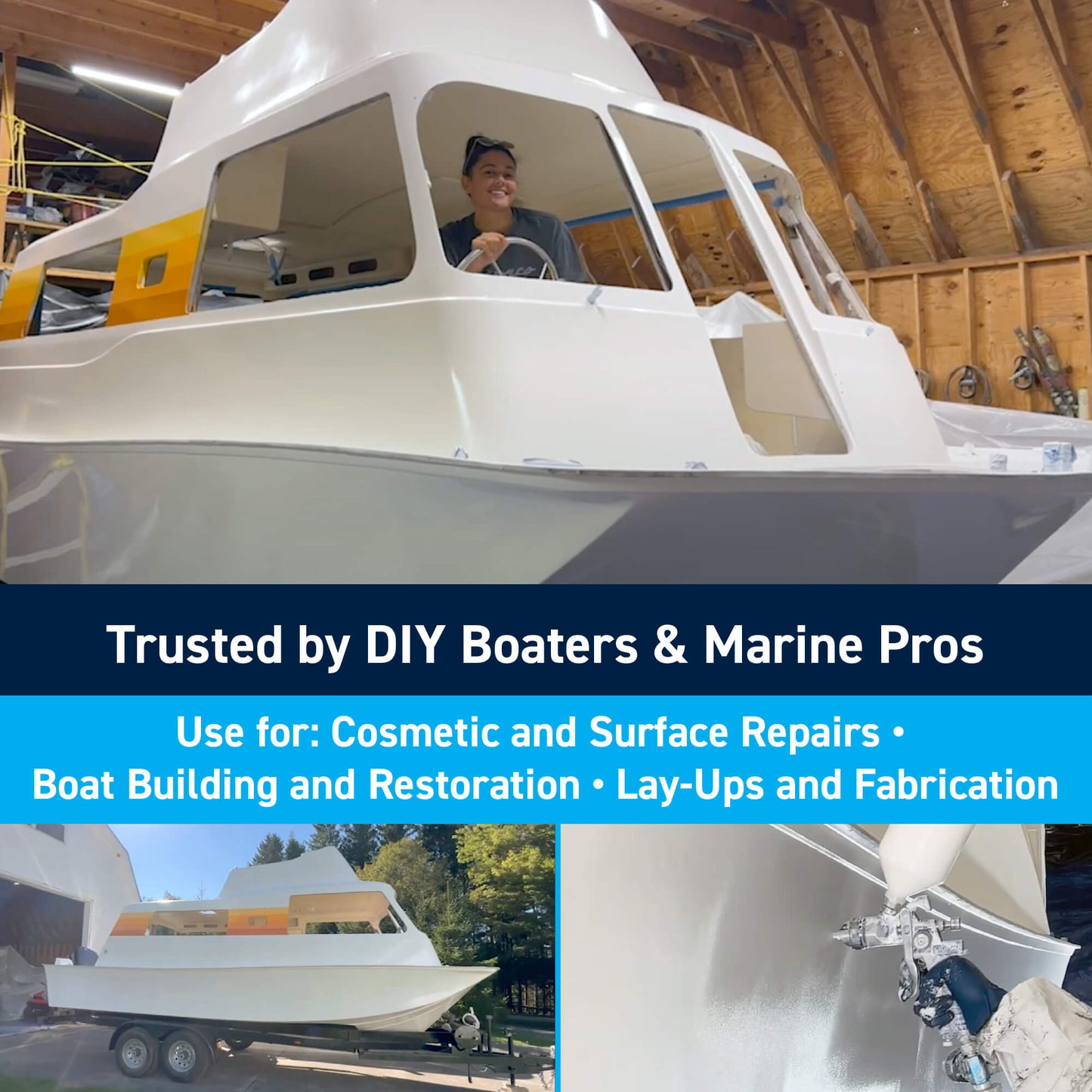
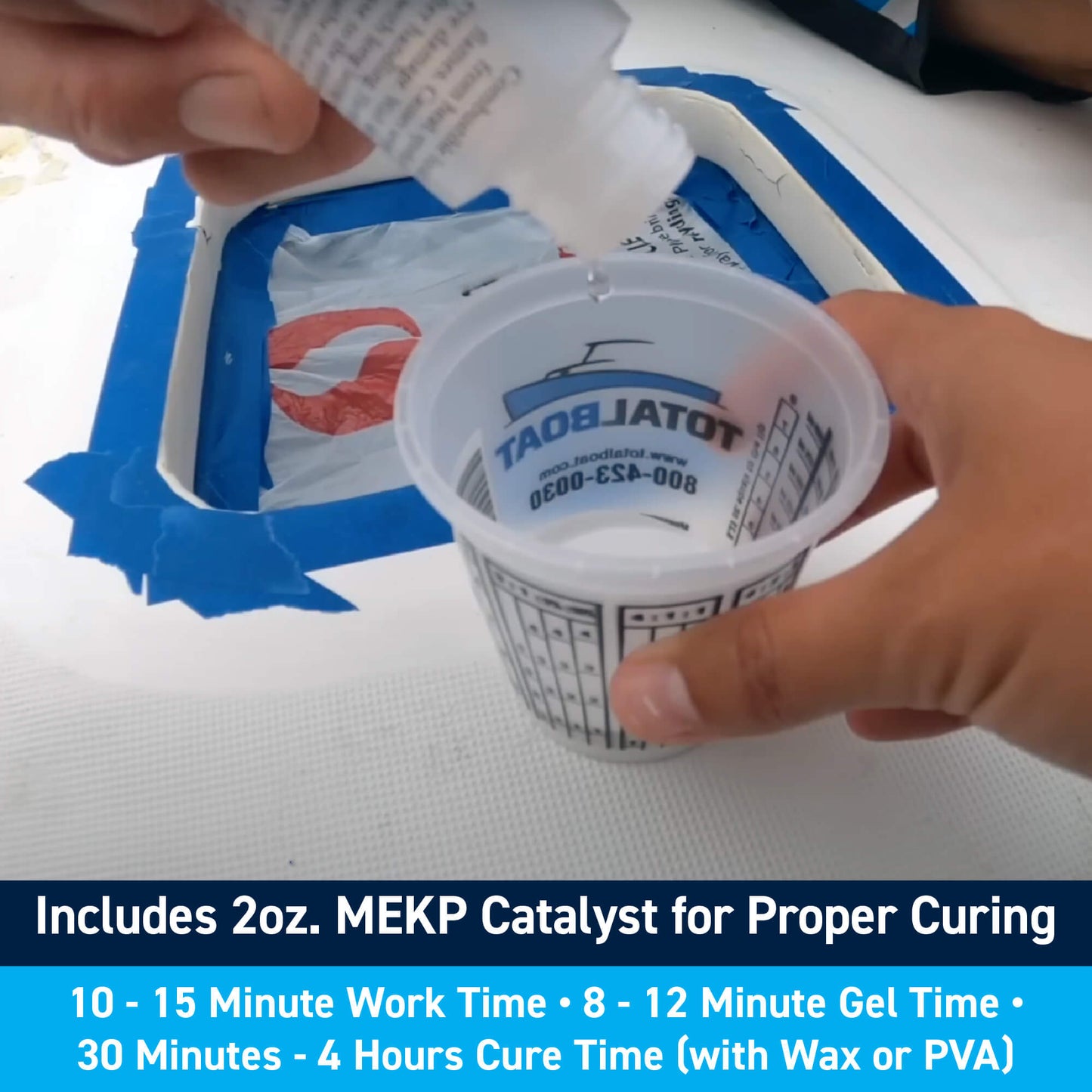



PREMIUM GELCOAT FOR DURABLE, GLOSSY REPAIRS
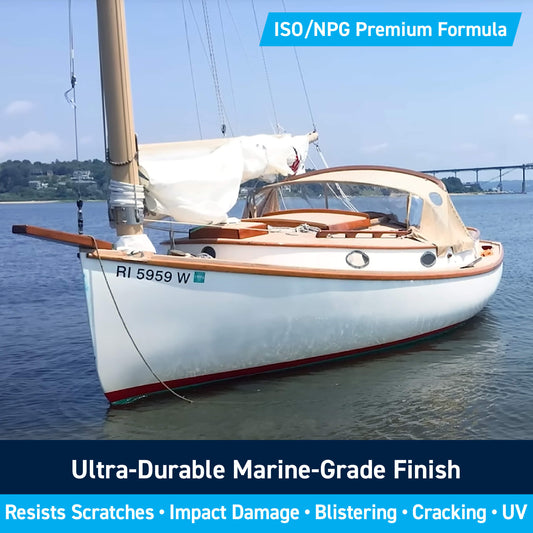
Our high-viscosity marine gelcoat is non-sagging and super strong. In fact, its ISO/NPG (Isophthalic/Neopentyl Glycol) resins are considerably more durable than standard, orthophthalic resin formulas. Once cured, just wet sand and buff to bring out that showroom-quality glossy shine. TotalBoat gelcoat resists UV fading, scratches, blistering, and cracking, making this an ideal fit for building or repairing fiberglass surfaces on boats, RV exteriors, and motorcycles.
CHOOSE THE RIGHT GELCOAT FORMULA
Use TotalBoat Gelcoat with Wax for cosmetic repairs and final coats on properly prepared polyester fiberglass or existing gelcoat, from touching up hull scratches to refinishing worn deck surfaces. The wax allows the surface to cure tack-free, ready for sanding and buffing once fully cured.
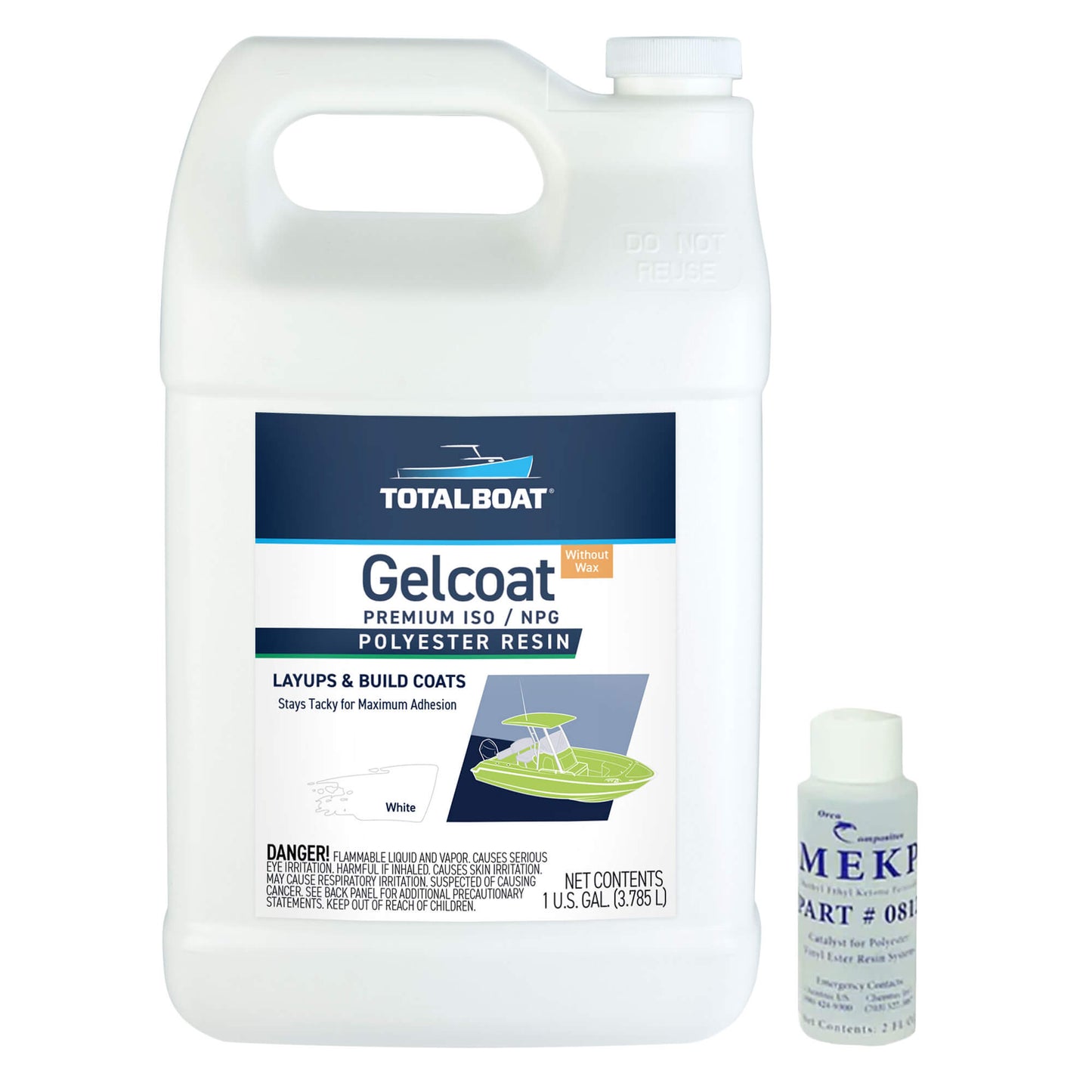
For boat building, molded fiberglass parts, or repairs requiring multiple coats, choose Gelcoat without Wax. Its tacky surface lets you build additional layers without removing wax between coats. Finish exposed surfaces with waxed gelcoat, or use a wax additive or PVA coating to achieve a tack-free cure. Both formulas can be tinted with compatible polyester colorants to help match your boat’s existing finish.
CHOOSE THE RIGHT GELCOAT FORMULA
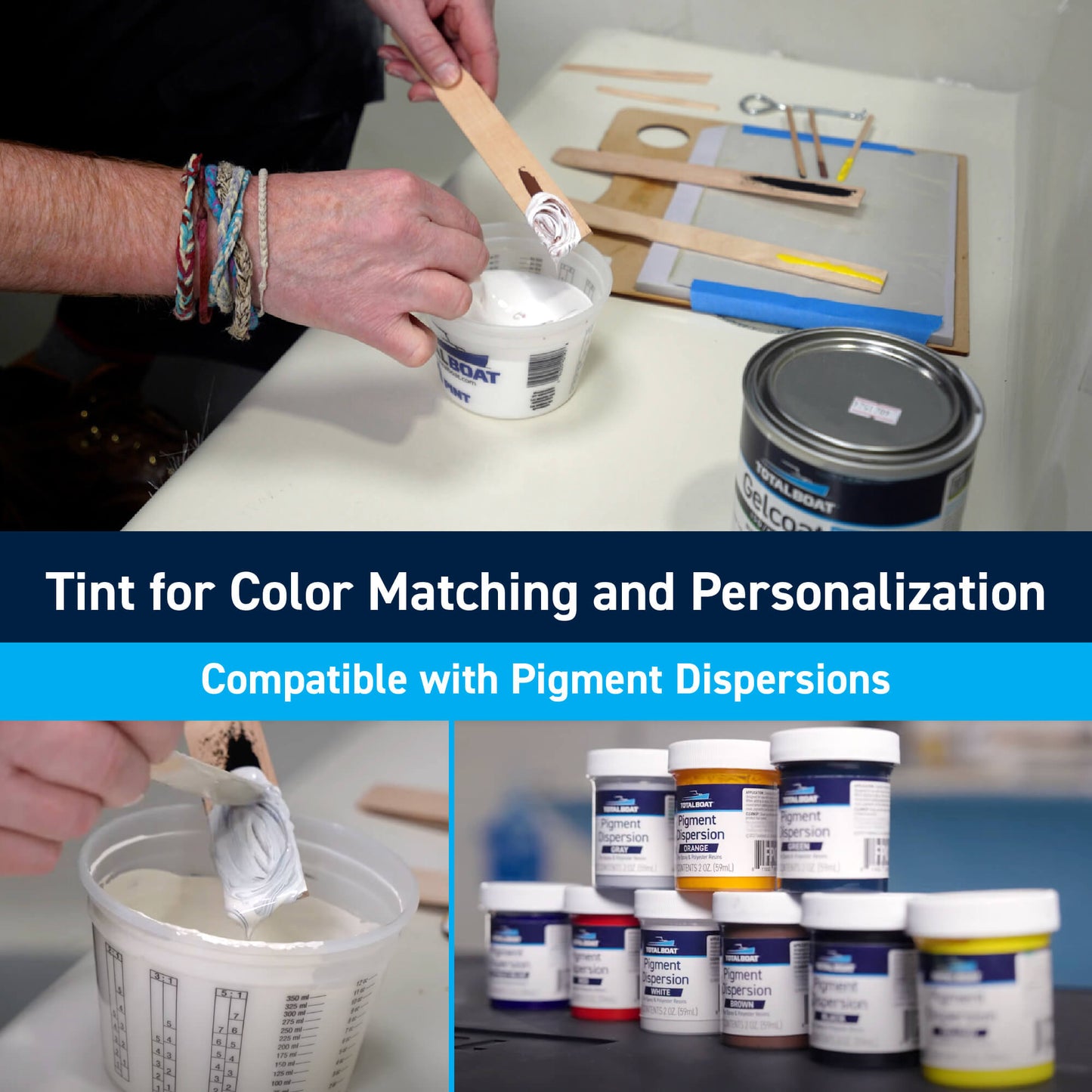
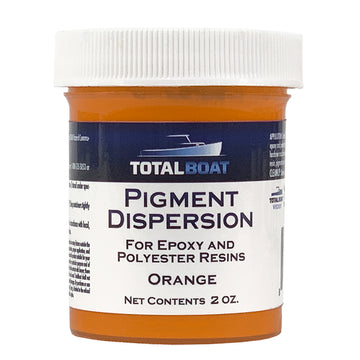
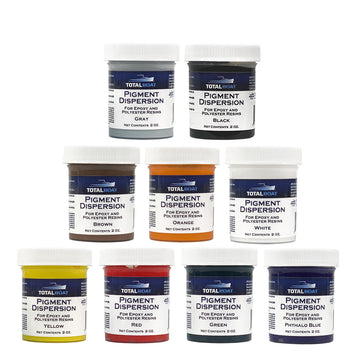
TotalBoat marine gelcoat can be colored prior to adding catalyst to color match your hull's existing finish. Using pigment dispersions or other compatible colorants, create bold, dark colors with Neutral or lighter, pastel colors with White. Keep in kind that adding too much pigment can compromise the cure, so only tint up to 1% by volume on White and up to 10% for Neutral (up to 12% with red, yellow, purple, orange, and light green colors).
Rather than a fixed ratio like epoxy, polyester gelcoat uses an adjustable amount of MEKP (methyl ethyl ketone peroxide) to initiate curing. Adjust the catalyst level based on the gelcoat amount and working temperatures to help control the gel time. Cooler temperatures may require a higher percentage of catalyst than warmer temperature conditions.
Proper catalyzation is imperative for proper cure when using polyester. The higher the percentage of hardener, the faster the gelcoat will dry. Because air and surface temperatures also affect the drying of gelcoat, take care not to over-catalyze or under-catalyze. Do not add less than 1% catalyst or greater than 3% catalyst. We recommend a trial batch to determine final catalyst ratio.
GELCOAT WITH WAX (FOR FINISHING) DETAILS
- Contains wax so additional patch aid additives are not required.
- Cures properly without PVA, wax paper, or special tools.
- Non-sagging formula fills superficial scratches. Deeper scratches require a filler such as TotalBoat Silica Thickener added to the gel coat.
- Gel coat can be mixed with coloring agents made specifically for polyesters (sold separately).
- Catalyst: MEKP (methyl ethyl ketone peroxide), included
- Colors: Available in Neutral & White
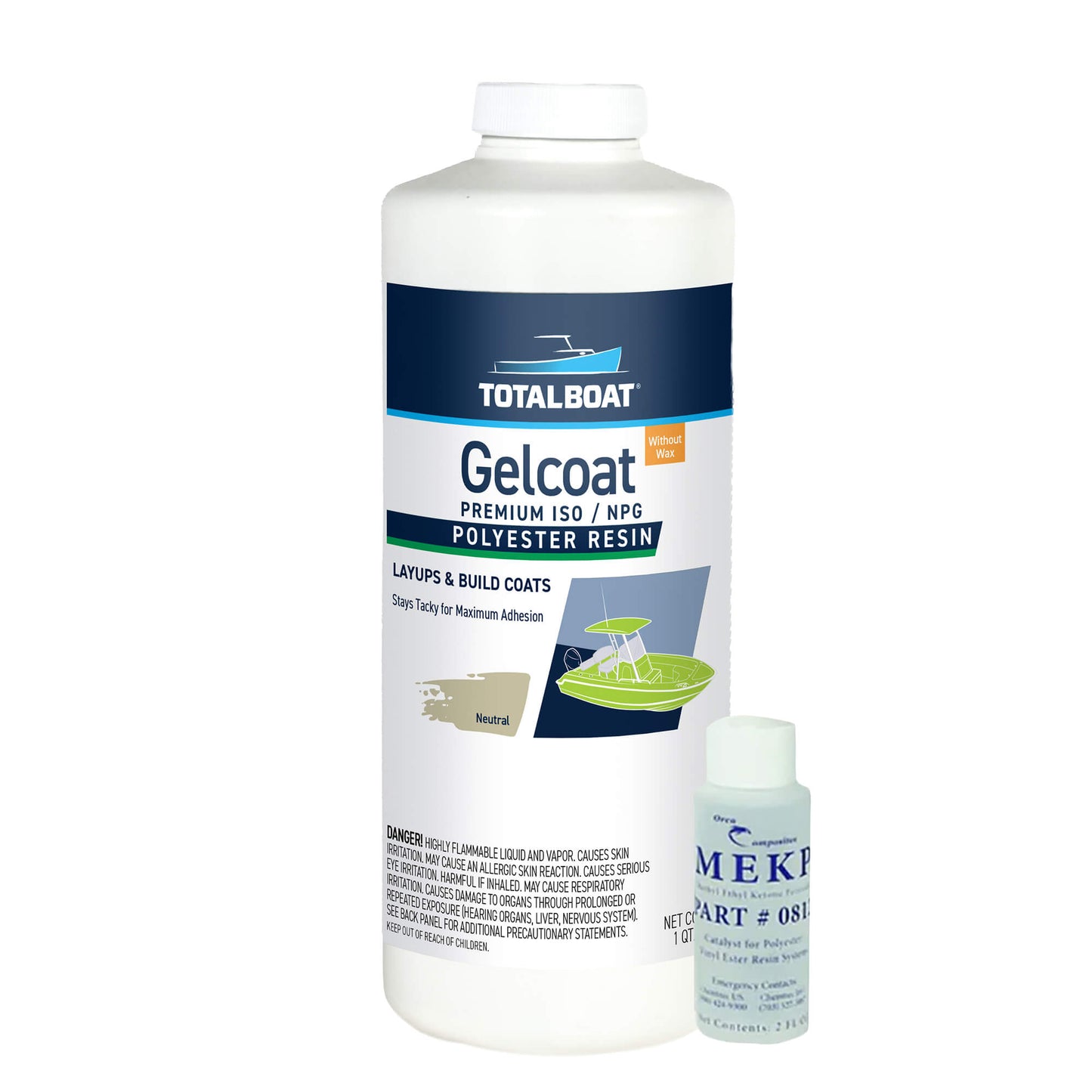
- Sizes: Neutral is available in Quarts only; White gelcoat is available in Quart and Gallon sizes
GELCOAT WITHOUT WAX (FOR LAYUPS) DETAILS
- Does not contain a wax additive, making it ideal as the first layer when building a boat hull or composite part on a prepared mold.
- Non-sagging formula can be mixed with coloring agents made specifically for polyesters (sold separately).
- Catalyst: MEKP (methyl ethyl ketone peroxide), included
- Colors: Available in Neutral and White.
- Sizes: Neutral gelcoat is available in a Quart size Kit only; White gelcoat is available in Quart and Gallon size Kits.
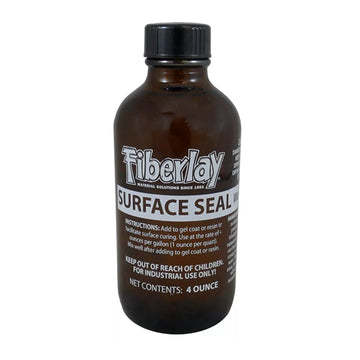
Note: Wax Additive is available to add to Gelcoat Without Wax so it cures to a tack-free surface.
FREQUENTLY BOUGHT TOGETHER
-
-
-
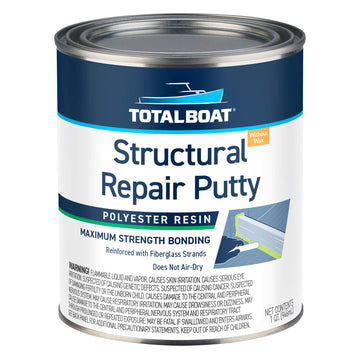
Polyester Structural Marine Repair Putty
Regular price $39.99-$97.99Sale price $39.99-$97.99Unit price per -

-
 Out of StockRegular price $5.99Sale price Regular price $5.99Unit price per
-
-

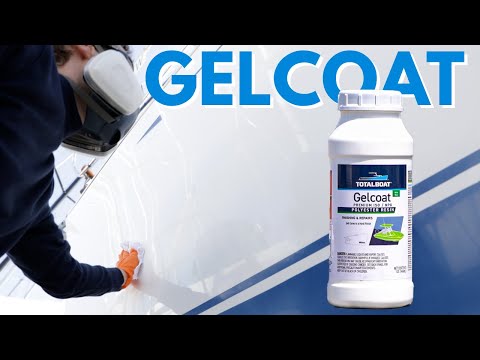
Gelcoat Damage Repairs FAST and EASY | DIY Boat Owner Basics
Gelcoat Damage Repairs FAST and EASY | DIY Boat Owner Basics
TECHNICAL DATA
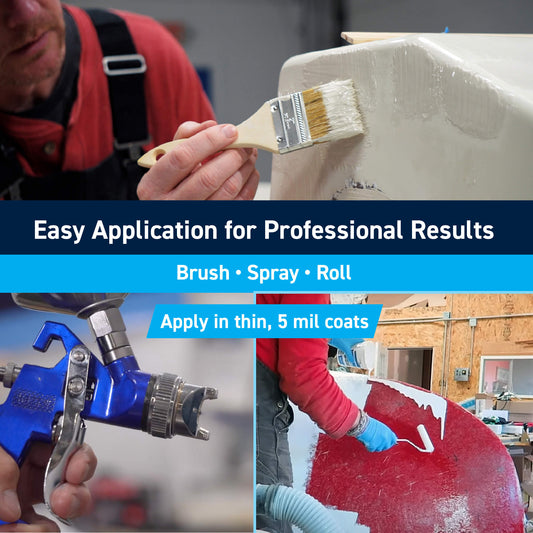
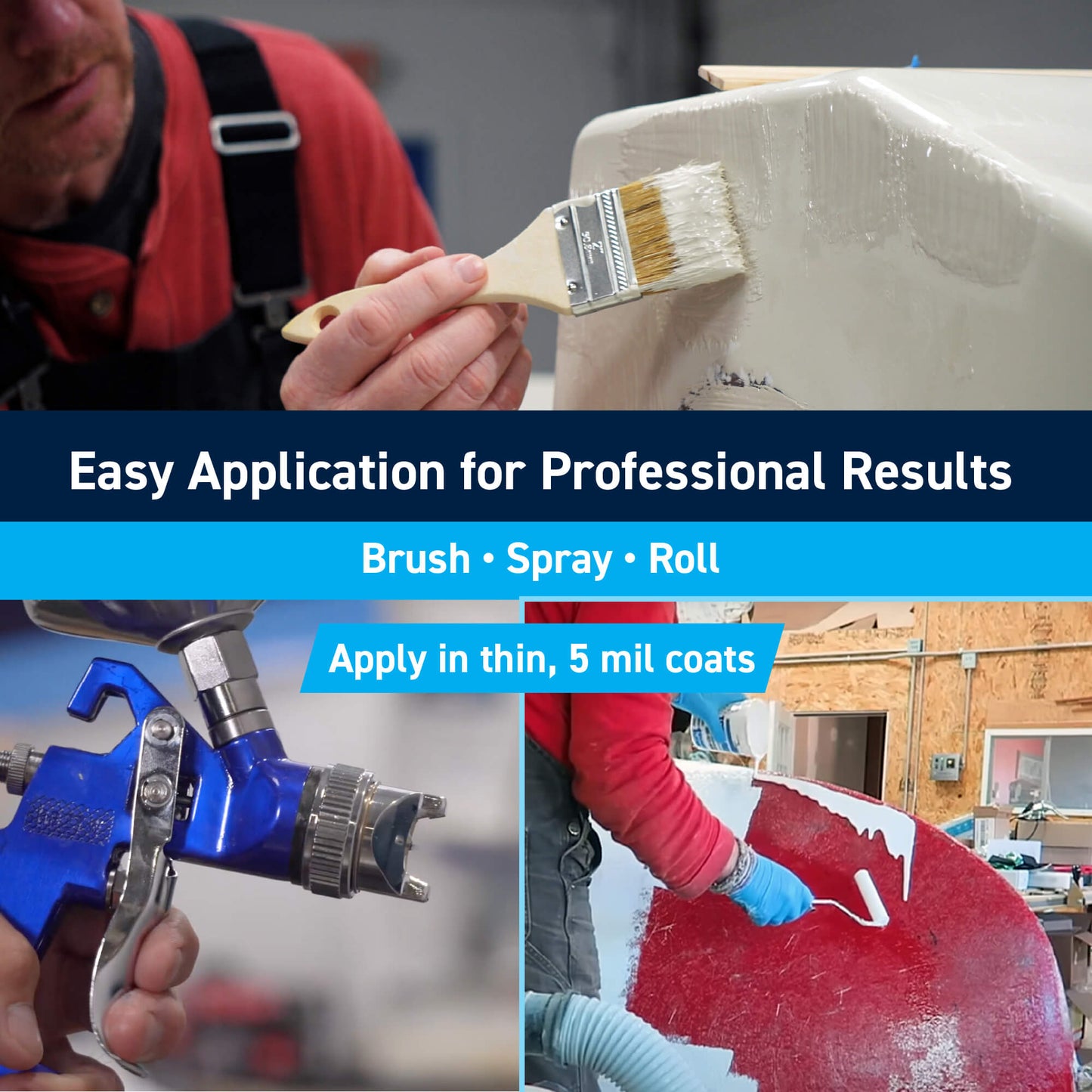
- Application Method: Brush, Roll, or Spray (Spraying tends to yield the best results, with the least amount of sanding after curing.)
- Application Temperature/RH: 50-95°F (70-80°F is ideal), relative humidity 0-90%
- Catalyzation Percentage: 2% MEKP, 9% Active (14-16 drops of MEKP per ounce, or 2 teaspoons per pint of gelcoat)
- Application Thickness: Roughly 5 mils per coat, building up 18-25 mils
- Working Time: 10-15 minutes (2% catalyst @ 77°F, 1 ounce)
- Gel Time: 8-12 minutes (2% catalyst @ 77°F, 1 ounce)
- IMPORTANT! Do not apply TotalBoat Gelcoat directly on TotalBoat TotalFair Epoxy Fairing Compound. Gelcoat should not be applied directly over TotalFair or the gelcoat will not cure properly. Instead, apply TotalBoat TotalProtect Epoxy Barrier Coat Primer over TotalFair, before applying Gelcoat. Primers are sold separately.
- Colors: White, and Neutral (for tinting – it contains no color, but it is not considered clear).
- VOC Content: Less than 400 g/L
- Coverage (sq ft/gal): 12.8 sq ft @ 1/8"; 25.7 sq ft @ 1/16"; 51.3 sq ft @ 1/32". Does not include any material wasted from application; generally 10- 15% is wasted.
- Shelf Life: 6 months from date of manufacture
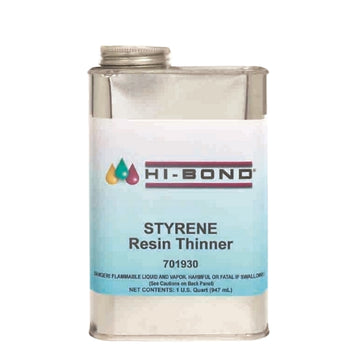
- Thinner: Styrene thinner. Acetone is not recommended as it can cause yellowing, orange peel, and other detrimental results.
- Surface Prep Solvent: Acetone
- Cleanup Solvent: Acetone. Once cured, it must be removed mechanically.
-
Polyester Gelcoat
- Best for:
- Substrates:
- Color:
- Application method:
- Catalyst/percentage:
- Mold release agents:
- Contains an air dry agent?
- Application temperature/RH:
- Working time:
- Gel time:
- Thinner:
- Cleanup:
- Coverage:
- Units of measure:
- THIS ITEM
-
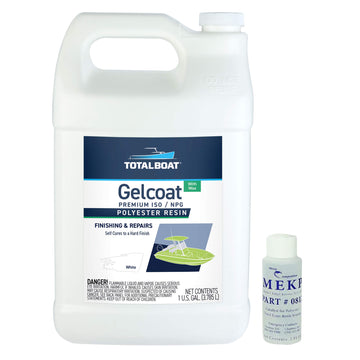
Polyester Gelcoat
- Best for: Boat building, repairs and layups
- Substrates: Polyester resin, TotalBoat Polyester Fairing Compound, previously gelcoated surfaces, TotalBoat Polyester Structural Repair Putty, TotalBoat TotalProtect, and TotalBoat 2-Part Epoxy Primer. See Technical Data Sheet for details.
- Color: White, Neutral
- Application method: Brush, Roll, or Spray
- Catalyst/percentage: 2% MEKP, 9% active (14-16 drops of MEKP per ounce, or 2 teaspoons per pint of gelcoat)
- Mold release agents: Mold release paste wax, PVA (polyvinyl alcohol)
- Contains an air dry agent? Available with and without wax
- Application temperature/RH: 50-95°F (70-80°F is ideal), 0-90% RH
- Working time: 10-15 minutes (2% catalyst @ 77°F, 1 ounce)
- Gel time: 8-12 minutes (2% catalyst @ 77°F, 1 ounce)
- Thinner: Styrene
- Cleanup: Acetone. Once cured, it must be removed mechanically.
- Coverage: Approximately 12.8 sq ft/gal @ 1/8"; 25.7 sq ft/gal @ 1/16"; 51.3 sq ft/gal @ 1/32". Estimates do not account for waste.
- Units of measure: Quart and Gallon (includes MEKP catalyst)
-
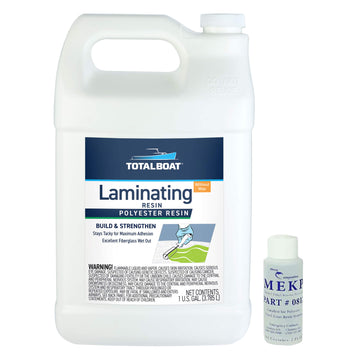
Polyester Laminating Resin
- Build coat resin for laminating & repairs
- Polyester resin, TotalBoat Polyester Fairing Compound, previously gelcoated surfaces, TotalBoat Polyester Structural Repair Putty, metals (that have been ground or heavily sanded to a bare, shiny finish, before they can oxidize, and wood substrates sanded to a rough surface
- Blue
- Brush or Roll
- 1% MEKP, 9% active (7-8 drops of MEKP per ounce)
- Mold release paste wax, PVA (polyvinyl alcohol)
- No
- 50-95°F (70-85°F is ideal); 0-90% RH
- Varies by mass and application thickness
- Varies by mass and application thickness
- Do not thin this product.
- Acetone. Once cured, it must be removed mechanically.
- Approximately 12.8 sq ft/gal @ 1/8"; 25.7 sq ft/gal @ 1/16"; 51.3 sq ft/gal @ 1/32". Estimates do not account for waste.
- Quart and Gallon (includes MEKP catalyst)
-
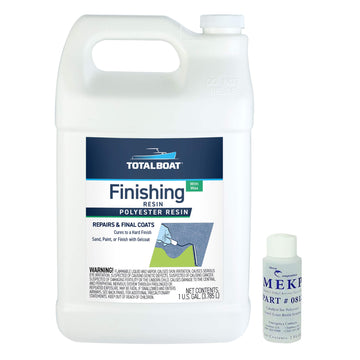
Polyester Finishing Resin
- Final or finish coat over laminating resin
- Polyester resin, TotalBoat Polyester Fairing Compound, previously gelcoated surfaces, TotalBoat Polyester Structural Repair Putty, metals (that have been ground or heavily sanded to a bare, shiny finish, before they can oxidize, and wood substrates sanded to a rough surface
- Blue
- Brush or Roll
- 1% MEKP, 9% active (7-8 drops of MEKP per ounce)
- Mold release paste wax, PVA (polyvinyl alcohol)
- Yes
- 50-95°F (70-85°F is ideal for a proper cure); 0-90% RH
- Varies by mass and application thickness
- Varies by mass and application thickness
- Do not thin this product.
- Acetone. Once cured, it must be removed mechanically.
- Approximately 12.8 sq ft/gal @ 1/8"; 25.7 sq ft/gal @ 1/16"; 51.3 sq ft/gal @ 1/32". Estimates do not account for waste.
- Quart and Gallon (includes MEKP catalyst)
Watch More Videos
-
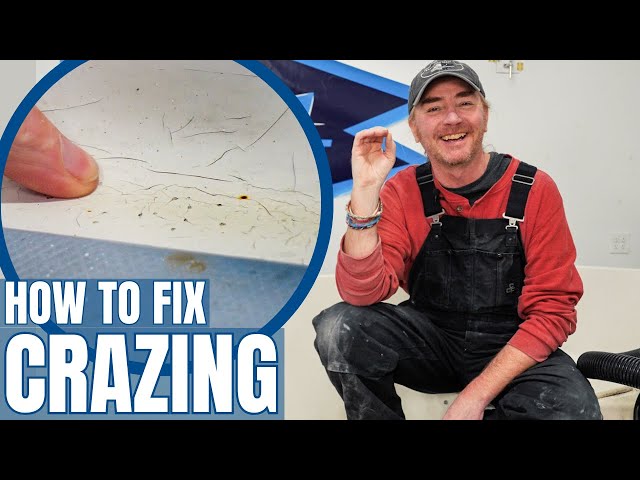
How to Repair Crazing on Your Boat | Boatworks Today with Andy Miller
-
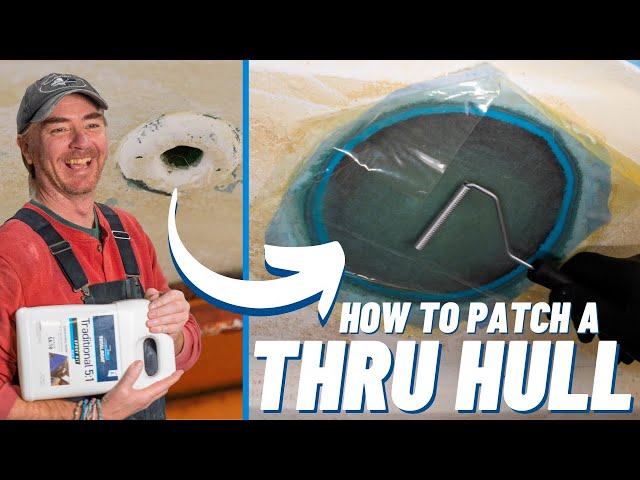
How to Safely Plug a Hole Below the Waterline | Boat Repair with Andy Miller of Boatworks Today
YOU MAY ALSO LIKE
-
-
-
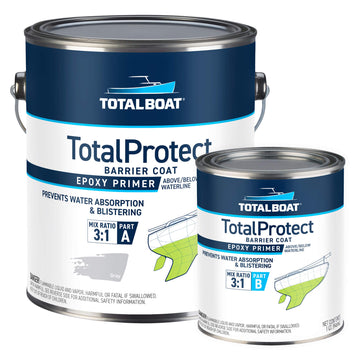
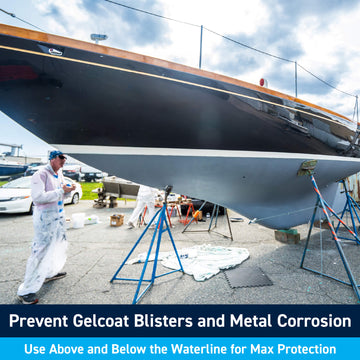
TotalProtect Epoxy Barrier Coat Primer
Regular price $57.99-$139.99Sale price $57.99-$139.99Unit price per -


FREQUENTLY ASKED QUESTIONS
-
How can I use TotalBoat Gelcoat to repair chips and scratches on my fiberglass boat?
Use it to touch up cosmetic defects on properly prepared hulls and decks. Choose the waxed formula for a single-coat repair or as the final coat of a larger repair. If the damage reaches the fiberglass laminate, repair the laminate before restoring the finish. -
What’s the difference between gelcoat with and without wax?
Use the waxed formula for a final coat exposed to air. The wax forms a barrier that lets the surface cure tack-free. Choose the unwaxed formula for build coats or fiberglass layups in a mold. If you finish with an unwaxed coat, apply a PVA air barrier or use a paraffin wax additive as directed. -
Can I use this to repair fiberglass RV and motorcycle parts?
Yes. Use it for touch ups on chips and scratches on RV body panels, on motorcycle fairings made with polyester fiberglass, or to repair parts with an existing gelcoat finish. Avoid applying it directly over paint, plastic, bare metal, or unknown resin composites. If the fiberglass itself is damaged, repair it before restoring the finish. -
Which surfaces are compatible?
Apply the coating to properly prepared existing gelcoat or polyester resin surfaces, including fiberglass made with polyester resin. Compatible repair materials include TotalBoat Polyester Fairing Compound and TotalBoat Polyester Structural Repair Putty. Avoid direct application to epoxy, bare metal, wood, plastics, or composites with an unknown resin system. -
Do I need a primer before applying gelcoat over TotalFair?
Yes. Use TotalBoat TotalProtect Epoxy Barrier Coat Primer between TotalFair Epoxy Fairing Compound and the finish coat. Allow the primer to cure for 5–7 days under normal conditions, then prepare the surface to apply gelcoat. See the TotalBoat Gelcoat TDS for more details. -
Can I use below the waterline?
This coating is designed for use above the waterline. Below-waterline use is limited to boats that spend only a few hours at a time in the water, such as trailered powerboats and dry-sailed racing boats. For boats that stay in the water, use an antifouling bottom paint. -
Should I choose White or Neutral for color matching?
Choose White for light or pastel shades and Neutral for deep or bold colors. Neutral won’t cure clear, even without tint. Use a polyester-compatible colorant and compare a fully cured test sample with your boat’s finish. -
How much gelcoat do I need for my project?
Measure the area you plan to coat and use the combined thickness of all coats to estimate how much to buy. At a total thickness of 1/32″, a quart covers about 13 sq. ft. and a gallon covers about 51 sq. ft. before waste. Allow 10–15% extra for application waste. White comes in quarts and gallons, and Neutral comes in quarts. -
Can I brush, roll, or spray it, and how many coats do I need?
You can brush or roll it, or spray it with equipment designed for gelcoat. For many repairs and recoating projects, apply about 5 mils per wet coat and build to 18–25 mils total. Use the unwaxed formula for build coats and the waxed formula for the exposed final coat. -
Is the catalyst included?
Yes. Both formulas include MEKP catalyst. The amount needed depends on the batch size and temperature, so some projects may require extra. See the TotalBoat Gelcoat TDS for more details. -
How long should I wait before wet sanding?
Full cure typically takes 24–72 hours, with cooler temperatures extending that time. Once the coating has fully cured, remove any surface wax before wet sanding.